| |
 |
Softwords Newsletter
April 1996
Playing Medical Ping-Pong...It
Takes Two to Play
At A&L, we believe that
technology is one of the keys which will help unlock a less troubled
future for the medical community of Ontario. So, we have been striving
to create procedures that will help you deliver world-class medical
care more efficiently. 
Our thinking extends beyond the bounds of technology to attitudes and
basic approaches. We would like to share some of that thinking with
you in a series of articles that we will publish in Softwords over the
next few months.
Some of our thinking has come out of listening to people who use Ontario
medical services. Some from interviews and discussion with people in
various positions in the medical community, and some of our thinking
is the result of articles written in newspapers and magazines. For example,
in a column called "Feedback, I Say, I Say" (The Medical Post, October
10th, 1995) written by Patricia Mark, she states;
To governments, I say, "I will do my best to educate and
advise." To my patients, I say, "Make your choices and be
aware of the possible outcomes. I will take neither credit nor blame
for the decisions you make in order to maintain your health." I
AM NOT RESPONSIBLE. YOU ARE.
In a seemingly unrelated article, titled, Gzowski's Canada,
Borrowed Jammies, (Canadian Living, February 1996) written by Peter
Gzowski, he tells of his experiences getting tests done in an Ontario
hospital and he states;
I worried about a lot of things when I was in the hospital- maybe
some of them too much. But one of them wasn't money. I like it that
way, don't you?
In these two articles we thought we saw the root of some of
the problems which underlie the Medical Profession. These kinds of comments
could easily represent views on who is responsible for medical care
of a patient. One view saying, in effect, patients are primarily responsible.
The other suggesting, it's nice not to have to be responsible, especially
financially.
In our opinion, medical professionals regularly make important decisions,
and those decisions have consequences which bear responsibility onto
decision makers. Decisions are accepted or rejected, and enacted with
care or lack thereof, and that too bears responsibility onto decision
makers. And all of it, under any circumstances has a cost in financial
terms. That too, in our opinion, is a shared responsibility of decision
makers.
We believe a part of the light at the end of the long and dark tunnel
of the Medical Community is education. In this sense, if we are to retain
the medical system as we know it (whether it is the best idea or not
is a separate issue) then something has to be done. But one thing is
for sure in our books... attaining medical care is a two-way partnership.
Medical Ping-Pong requires two players... Ping... you describe your
symptoms, discuss your main concerns and any hunches. Pong... your doctor
makes a diagnosis and tells you about treatment options. Ping... you
state personal preferences and\or ask about options. Pong... your doctor
restates options and how they relate to you. Ping... you accept one
of the recommended suggestions or learn more about what you can do.
You both win because you end up with the treatment plan best suited
to you.
In this issue we have included an Insert to hand out to your patients
to assist them in attaining better health care. We call it the A&L
Caring Approach. You are free to photo copy it and hand it out to patients
as you see fit. Its purpose is to help educate patients in becoming
more involved and pro-active in health concerns and in attaining quality
health-care.
Life is self-generating, self-sustaining action. Each life is an individual's
and relies the individual (or guardian) to care, be concerned and take
appropriate pro-life action. Everywhere in the world, Health Care is
a growing concern. Health costs and demands are rising. This is true
whether you live in Ontario and are covered by OHIP, or whether you
live somewhere else and are covered by private insurance companies or
HMOs. So, we have tried to put together some guidelines that may help
you have a better partnership with your patients. (You may photocopy
these guidelines and hand it out with the A&L Caring Approach.)

Dear Patient...
The first important guideline in
Being a Concerned Medical Consumer, is to work in partnership with your
doctor. Like all partnerships, there has to be a common ground based
on common goals, shared effort and mutual understanding. If you and
your doctor work together, better health and better care will be the
result. You will both gain from your partnership. Frankly, the quality
and the cost of medical care will often depend more on you than your
doctor. Here are three guidelines to follow...
A) Work in partnership with your doctor.
B) Take an active part in medical decisions.
C) Become skilled at obtaining quality medical attention.
Let's breakdown the first guideline into a few easy-to-follow suggestions.
There are five ways to be a better partner, partner...
Take care of yourself. In fact, take great care of yourself and your
loved ones. No doctor would prefer that you be sick. When problems do
arise (as the complexity of life will ensure), you and your doctor want
a return to good health ASAP.
Take note of health concerns. When you first observe a problem, use
the Caring Approach sheet and jot things down when they come up. These
are often early signs that may help your doctor make more accurate diagnoses.
It will also aid in managing the problem down the road, especially recurring
problems. Be specific in your note taking on symptoms. Mark down when,
how long, how painful, under what circumstances... for each problem.
Note, as well, anything unusual that could possibly be related. Do you
have a good medical book you could refer to to better understand the
problem? Assuming it is not an emergency, keep a eye on it. Update your
notes. Is your problem getting better or worse? Staying the same? (Make
sure you date all entries.) Do you have a hunch as to what the problem
is?
What can you do? Lots. As a partner, you may be able to manage a lot
of minor problems, everyone has them. Learn whatever you can. Buy a
couple of recommended books. (Does your doctor have a good book that
he would recommend?) Note whether anything you have done seems to help.
Set a definite time by which you will seek professional help if things
do not significantly improve.
Prepare for office visits... Get the most you can from each visit with
your doctor. Most appointments are 10-15 minutes or less. The better
organized you are, the better partnership you have. Bring your Caring
Approach sheet with you. Prepare a check-list of concerns and write
them on your Caring Approach sheet. Write down your main complaint,
and maybe even your fears or hunches. These are often helpful. If you
have any questions, write down the most important 2-3. (A doctor may
not have the time for many questions. But maybe he or she has hand-out
articles or recommended reading you could do.) Be sure to write down
on your Caring Approach sheet a list of any medications you are taking,
or conditions you have.
Be an active partner. State your main concerns, symptoms and share your
fears and hunches. Be straight with your doctor. As a partner, embarrassment
is not going to make us hold anything back. And if you have no intention
of filling out a prescription, let your partner know. Getting alternative
treatment? Let them know that too. Your partner needs to know what is
going on with you in order to offer you the best advice. Know what is
going on. If a drug test or treatment is recommended, get as much information
as you can. Be a curious partner. If necessary, take notes. Write down
diagnosis, the treatment, follow-up plan and anything that you should
or should not do at home.

A&L Caring Approach
Step 1. Be a good scientist, partner. Be Observant.
When did your problem start?
What are the symptoms?
Where is the pain? Dull ache or stabbing pain? How long does the pain last?
Under what conditions?
Do you have a temperature? Are you able to measure your Blood Pressure?
What is your pulse per minute? Number of breaths per minute?
Think back as best you can. Have you ever had this problem before? Yes No
What did you do about it?
Have you sought medical attention before, concerning this problem? What
was done?
Have there been any recent changes in your life? (Stress, medications, food,
exercise, etc.)
Does anyone at home or at work have these symptoms?
Step 2. Be a curious partner. Learn more about your problem.
Do you have a medical book or guide at home? Note useful page numbers concerning
your symptoms for easy reference.
Are there books or articles you could refer to?
Is there advice from others (lay or professional) that seems to make sense?
Step 3. Be a pro-active partner. Have an action plan.
What do you think the problem is? Why?
What have you been doing (or will you do) to treat yourself?
When do you think you should call your doctor? (Medical books may have good
suggestions.)
Step 4. Good scientists measure changes. Evaluate your progress.
Are your actions working? (Are you getting better?)
Have there been any changes?
Are there other things that would account for these noticed changes?
A&L Caring Approach (con't)
Good partners prepare. Before your doctor visit:
Complete the Caring Approach sheet and make sure you take it with you to
your appointment.
Take a list of medications and a record of your last visit for similar problems.
During your doctor visit:
State your main problem first.
Describe your symptoms. Use the Caring Approach sheet you have with you.
Describe past experiences with the same problem.
Partners can't be expected to remember everything. Write Down:
Temperature and blood pressure if it is taken.
The diagnosis. (What is wrong with you.)
What might happen next. (Prognosis)
Your self-care plan and what you can do at home. (Or, what you shouldn't
do.)
In cases where drugs, tests, and treatments are suggested, ask the following:
What's its name?
Why is it needed?
What are the costs and risks, if any?
Are there alternatives?
What if I do nothing?
How do I take this drug?
How do I prepare for these tests?
How long will this take?
When the visit is concluding, ask:
Am I to return for another visit?
Am I to phone in for test results?
Are there any danger signs I should look for?
When do I need to report back?
Is there anything else I need to know about this?
Thank your partner and wish them a good day.
Next
Issue... Taking Part in every Medical Decision

WCB
Claims and Balances
The Query language built into the A&L
Medical System, as we have mentioned many times, is one of the most useful
and powerful features of the software. The Query Language is something a
little more sophisticated than many of the other computer tasks we engage
in on a daily basis. The Query Language can be intimidating to users who
are unfamiliar with its syntax, but it allows for flexible analysis of the
database records from many perspectives. Which means that the database records
and files can be used in numerous ways. The Reports Module of the A&L
Medical System does much of this, but in a fixed or rigid format. Because
each office is unique, often there is a need for specialized utility of
the database information. Thus, the Query Language or the TCL Mode allows
you to generate ad hoc reports, on the basis of open variables that you
stipulate to reveal different aspects of the computer data that would not
be otherwise available. In other words, the Query Language is a way to access
information you have entered in the various files (patient files, for example)
and generate a written report. For example, patient records can be searched
by birthdate to show all patients of a specific age, but the same records
can also be searched by postal code to show all patients who live in the
same county or district. The output of these queries of course can be viewed
on the screen or printed as a report.
All of this is possible in the TCL mode (Query Language) of the A&L
Medical System. The commands and parameters of the TCL Mode are unique to
it, so you must set a command and then the conditions carefully to accurately
set boundaries for the search.
To go the the TCL mode, simply...
Type the letter [T] at any Main Menu of the A&L Medical System
and press the [ENTER] key.
A colon prompt (::) will be displayed. The number of colons can vary
and do not matter. At this prompt, type your entry in CAPITAL LETTERS, on
one line. The TCL language will isolate the data you wish to analyze.
So, for example, if you wanted a list of patients who have been billed through
the Workman's Compensation Board, including their names, phone numbers as
well as a balance (even if $0.00) then you would type in the following.
LIST MSF310 PTN.NAME PTN.PHONE TRANS.BALANCE IF BILL.CD = 'W' (PE)
(PE) will send it to the printer. If you wish to view it on the screen,
leave it off the command line. After you have finished using the TCL Mode,
type the word [RETURN] at the colon prompt and press the [ENTER]
key to return to the main menu.
The World of Imaging
 Your patient charts have distinct
sections. A page or two of patient information and demographics, and then
pages of progress notes, lab investigations and requisitions, consult letters
etc. Are you thinking that you would like to rid yourself and your office
of much or all this paper? What of X-rays, photographs or even sketches
you have made in patient notes? Your patient charts have distinct
sections. A page or two of patient information and demographics, and then
pages of progress notes, lab investigations and requisitions, consult letters
etc. Are you thinking that you would like to rid yourself and your office
of much or all this paper? What of X-rays, photographs or even sketches
you have made in patient notes?
It started out as a simple idea. A&L visited many clinics, offices and
hospitals with one question in mind. What could we do to make life better
for medical professionals? Even offices that were fully computerized and
had the latest technology?
Well, to get an answer to this, we extended our visit at many places (those
that would let us) and simply watched how a typical day was spent. We watched
patients enter, wait, be treated and leave. We watched other patients take
their place in endless waves. We watched office staff take down names, make
appointments, make calls to specialists, re-shuffle appointments, still
smile at others who arrived hoping they could somehow be squeezed in to
see the doctor. We noticed the number of calls and interruptions. We noticed
piles of files and charts on the left, on an unused portion of the desk.
We noticed a different pile of files and charts on the right, piled in the
corner. We followed charts around the office from both of these piles. We
watched what happened when mail was delivered and we took out our stop-watches...
Time was spent on the phone... time was spent on patients... time was spent
trying to politely re-shuffle appointments after cancellations or after
the doctor whispered he would not be available tomorrow. Time was spent
on cleaning rooms to quickly prepare for the next patient. Time was spent...
on many, many things... but we were amazed. Consistently, 30% or more of
staff time was spent getting, moving, handling, filing, re-filing those
charts... those files... especially the in and out piles that most offices
have. If you could watch how a typical day was spent, we think you would
be amazed too.
Pushing paper, moving paper, getting files, replacing files, checking files,
filing files, re-filing files, looking for files... charts... get the idea?
This was the beginning of the Document Console. Would your office be better
with less paper pushing, less filing and re-filing? Want to venture in that
direction but have been concerned about costs? Security? Seeing 60 patients
a day and wondering if or how an imaging system will handle your 5 to 8,000
patients without slowing down? Wondering if the computer can really be used
for x-rays? Consultant letters and hand written notes? Wondering what you
would accomplish by going paperless or even partially paperless? Looking
for window based billing software and a relational database program that
you can scan notes or bits of consults into? (Or, anything else in hard-copy
for that matter.)
Want to see what Document Imaging and less paper can do? Let us show you
the joys, the costs and the limits of going paperless. Seeing is free.
Death and Taxes in Ontario
 Someday we will not equate these two terms in
the same sentence, nor with the same cynicism toward what is certain in
the world. After paying more than your fair share of taxes for so long,
it is difficult to realize that most of our grandparents did not pay income
tax at all. Tax was considered stealing. That it became legalized only made
it all the more despicable. Someday we will not equate these two terms in
the same sentence, nor with the same cynicism toward what is certain in
the world. After paying more than your fair share of taxes for so long,
it is difficult to realize that most of our grandparents did not pay income
tax at all. Tax was considered stealing. That it became legalized only made
it all the more despicable.
Doctors in Ontario have had to pay back anything that exceeded a government
set ceiling limit. In the last five months, this has been approximately
10% per month. As of February, any billing amount left over was to be paid
in full. This left some doctors paying clawbacks of 50%, (some more, some
less) but all noticing the pinch like never before.
So, for February, if billed claims totalled $25,000, your actual payment
was $25,000 minus a Lump Sum (say, $9,500), then your total payment was
$15,500. You should note that the $9,500 deduction is only shown on the
OHIP message area, it is not part of the A&L Medical System calculated
figures.
So, as far as taxes go, make sure that these clawbacks are taken from your
taxable total. They should not appear as part of your 1995 Taxable Income.
Remember that lump sum deductions do not show up in the same way as the
line by line deductions that OHIP normally uses. For example, if you should
have received payment of $300,000, check to see that the lump sums are deducted
from it. If OHIP deducted $20k against your claims for '95, this should
be deducted from the $300,000. Lump sums are shown on the R.A. message area
which is located at the end of each R.A. Report. You've paid enough, don't
pay more than you have to.
Backups, Backup, Backups...
 Which is which? Which is which?
Perhaps this will help. There are probably three different backups that
your office takes, or should take.
The Submission Backup...
is a copy of the claims that are on your submission diskette. That is
it. There is nothing else included except the claims you are sending to
OHIP.
Backup Complete System Files
is a complete copy of all data, files and entries made in the A&L Medical
System program. We suggest that you take this backup everyday in case of
an emergency. This copy can be used to Restore the A&L System with all
your most recent entries. It is a necessary part of securing your office
against unexpected loss due to power outs, power surges, a faulty computer
component, a burnt-out Hard Drive, etc.
Both are necessary. Both have a proper, useful role, and we hope you see
that they are quite different from one another.
MOH, OMA and A&L...
Sharing the Vision
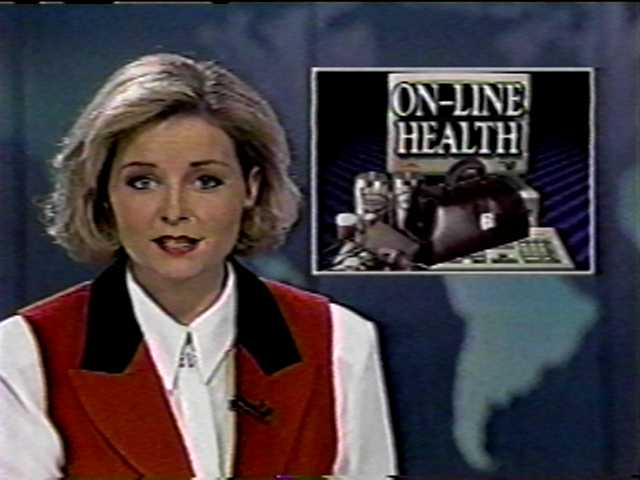 CFRB, CFTO and twelve other newspaper, television and radio stations were
present to hear about how the A&L HERO* Transactional Network and the
Ministry of Health's Smart System will be the vision of the future. The
need for a province wide health-care network has long been recognized by
both the public and the private sector. Neither side has the resources to
do it alone, yet it is vital to the well-being of the Ontario health care
system. The A&L HERO* and the MOH Smart System will provide medical practices
with a single integrated solution to office automation-- a propriety network
that puts medical offices on-line. CFRB, CFTO and twelve other newspaper, television and radio stations were
present to hear about how the A&L HERO* Transactional Network and the
Ministry of Health's Smart System will be the vision of the future. The
need for a province wide health-care network has long been recognized by
both the public and the private sector. Neither side has the resources to
do it alone, yet it is vital to the well-being of the Ontario health care
system. The A&L HERO* and the MOH Smart System will provide medical practices
with a single integrated solution to office automation-- a propriety network
that puts medical offices on-line.
The MOH, the OMA and A&L have the same vision as to which direction
health-care technology is going. A transactional health-care network is
seen as a way of linking health care providers together, using computer
and communication technologies. The goal is to have all health care providers
share consumer specific clinical information, including demographic data,
medication profiles, test results, and healthcare plans.
With A&L HERO*, all billing processes are automated, thus reducing time
spent on submitting claims. It has extensive error checking systems, therefore,
virtually eliminating rejections and re-submissions. Immediate retrieval
of patient information and remittance advice files allow for effortless
searches and file management. An Accounting Module tracks all transactions
including the MOH, insured and private claims. General statements, invoices,
lab requisitions and prescriptions can all be quickly viewed on the screen
and\or printed as reports or forms. Lab requisitions are accessed with the
click of a mouse. Laboratories are on-line allowing tests to be requested
electronically, via computer. Writing prescriptions is just as easy with
an on-screen prescription pad. Medications, inter-actions and any required
information can be accessed through look-up tables using mouse clicks and
electronic check-boxes. Prescriptions are transmitted directly to pharmacies,
eliminating errors and redundancies that may be life threatening. Scheduling
as well is completely computerized. The visual approach to electronic scheduling
supports multiple physicians and variable appointment time lengths. There
are checks for conflicts and over bookings, automated re-booking features
and over four separate status ratings for appointments.
A&L HERO* also has a robust e-mail system that puts doctors in-touch
with each other. And currently, access to the Internet is being set-up to
make A&L HERO* the health-care specific, electronic highway with bulletins,
essays, discussion groups, research postings and electronic classrooms.
All this will work hand in hand with the Ministry's Smart Card and Smart
System. It has been estimated that by using the information highway, the
health care system could eventually reduce costs by $6 billion, while increasing
the quality of care to all Canadians. A&L HERO* has the ability to make
this figure a reality. The Ministry's proposed Smart System concept focuses
on three priorities: health care, planning and administration. It will provide
electronic claim processing, error reports, health card validation and MOH
communications. The development of the Smart System concept will result
in users, providers and government sharing responsibility for management
and control of health care. It will coordinate patient care and referral,
provide continuing education for providers and consumers, reduce duplication
of services, reduce the administrative burden of care delivery, and manage
access through real-time checking eligibility.
The OMA has been meeting with the Ministry to discuss the details of the
new Smart System. In the Primary Care Reform, the OMA states that they endorse
the use of informatics to create a provider-based patient database with
the family doctor of a patient's choice to promote screening, periodic health
exams and appropriate on-going care.
As you can see, the MOH, the OMA and A&L have a very similar outlook
on the direction of technology and the health-care system. It has been a
long and dark tunnel for the Health Care industry everywhere in the world.
In Ontario, it is hoped that a Transactional Network which all providers
are connected to is the light at the end of that long and dark tunnel.
Softwords is a bimonthly newsletter published by A&L Computer
Software Ltd., (905) 886-8066.© Copyright. Reproduction of Softwords without written
permission is strictly prohibited. For information, questions or suggestions
concerning the publication, please contact or write the Editor, David Haisell
at the address above or at postmaster@anl.com.
* HERO is a registered trademark of HTN Inc.
|